Showing posts with label Tech. Show all posts

Sunday, 21 December 2014

4 Things You Can Learn From Google About Solving Problems

Google is often held up as an example of what an office--and an office culture--should look like. Many companies look to the search giant for ideas on how to engage employees and create a fun environment that makes people excited to come to work.

But Google is also an example of something perhaps even more important: how to approach problem solving at a company.

In a Harvard Business Review article, Greg Satell, an expert on digital strategy and innovation, points to one specific example of this problem-solving culture. As the story goes, in 2002 co-founder Larry Page walked into the office kitchen and hung up printouts of pages featuring results from Google's AdWords engine. At the top he wrote, "THESE ADS SUCK."

"In most companies, this would be seen as cruel--an arrogant executive publicly humiliating his hapless employees for shoddy work--but not at Google," Satell writes. "In fact, his unusual act was a show of confidence, defining a tough problem that he knew his talented engineers would want to solve."

Page's tactic worked, and within days Google engineers had improved AdWords, sending the ad engine on its way to becoming the leader in the space. According to Satell, the key was that Page focused on the problem itself, not the people behind it. He shared four different explanations for why this works.

1. "People want to do a good job."

Employees don't intend to screw up, so yelling at them for mistakes isn't going to get you anywhere. Instead of Page heading over to the ad team and screaming at them, he simply addressed a problem and understood that his employees, being human, would be motivated to fix it.

2. "Given enough eyeballs, every bug is shallow."

By hanging up the printout in the kitchen, Page was engaging the whole office in the problem, as opposed to one specific team. Maybe someone not on the ad team would have a brilliant idea. Two heads are better than one.

3. "People perform best at tasks that interest them."

Page could have brought the problem to specific employees, but instead he opened it up to anyone who was interested in trying to solve it. That means that the people who are more passionate about the specific issue would jump on it, most likely leading to better results.

4. "Great leaders provide a sense of mission and purpose."

Yes, it's important for employees to have skills and talent, but that won't produce results if they're not directed by passionate leaders who can motivate them. It's about creating a culture at work that inspires employees to be productive and effective. "When [Page] posted that note in the Google kitchen, he knew the culture at Google would go to work," Satell writes. "He didn't have to spell out what to do because he'd already created a company with a mission and a purpose."

BY REBECCA BORISON

Saturday, 20 December 2014

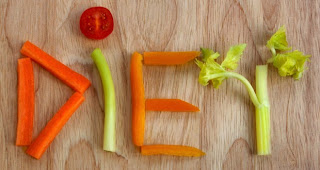
15 Best Diet Tips You Should Try

Everyone knows the keys to losing weight: Eat less and exercise more. Sounds simple enough, but in the context of real life and its demands, it can be anything but simple. So how do successful losers do it? To find out, WebMD asked experts across the country for their best diet tips.

Best Diet Tip No. 1: Drink plenty of water or other calorie-free beverages.
People sometimes confuse thirst with hunger. So you can end up eating extra calories when an ice-cold glass of water is really what you need.
"If you don't like plain water, try adding citrus or a splash of juice, or brew infused teas like mango or peach, which have lots of flavor but no calories," says Cynthia Sass, RD, a spokeswoman for the American Dietetic Association.

Best Diet Tip No. 2: Think about what you can add to your diet, not what you should take away.
Start by focusing on getting the recommended 5-9 servings of fruits and vegetables each day.
"It sounds like a lot, but it is well worth it, because at the same time you are meeting your fiber goals and feeling more satisfied from the volume of food," says chef Laura Pansiero, RD.
You're also less likely to overeat because fruits and vegetables displace fat in the diet. And that's not to mention the health benefits of fruits and vegetables. More than 200 studies have documented the disease-preventing qualities of phytochemicals found in produce, says Pansiero.
Her suggestion for getting more: Work vegetables into meals instead of just serving them as sides on a plate.
"I love to take seasonal vegetables and make stir-fries, frittatas, risotto, pilafs, soups, or layer on sandwiches," Pansiero says. "It is so easy to buy a variety of vegetables and incorporate them into dishes."

Best Diet Tip No. 3: Consider whether you're really hungry.
Whenever you feel like eating, look for physical signs of hunger, suggests Michelle May, MD, author of Am I Hungry?
"Hunger is your body's way of telling you that you need fuel, so when a craving doesn't come from hunger, eating will never satisfy it," she says.
When you're done eating, you should feel better — not stuffed, bloated, or tired.
"Your stomach is only the size of your fist, so it takes just a handful of food to fill it comfortably," says May.
Keeping your portions reasonable will help you get more in touch with your feelings of hunger and fullness.

Best Diet Tip No. 4: Be choosy about nighttime snacks.
Mindless eating occurs most frequently after dinner, when you finally sit down and relax.
"Sitting down with a bag of chips or cookies in front of the television is an example of eating amnesia, where you mindlessly eat without being hungry, but out of habit," says American Dietetic Association spokesperson Malena Perdomo, RD.
Either close down the kitchen after a certain hour, or allow yourself a low-calorie snack, like a 100-calorie pack of cookies or a half-cup scoop of low-fat ice cream. Once you find that you're usually satisfied with the low-cal snack, try a cup of zero-calorie tea, suggests Perdomo.

Best Diet Tip No. 5: Enjoy your favorite foods.
"I think putting your favorite foods off limits leads to weight gain because it triggers 'rebound' overeating," says Sass.
Instead of cutting out your favorite foods altogether, be a slim shopper. Buy one fresh bakery cookie instead of a box, or a small portion of candy from the bulk bins instead of a whole bag.
"You can enjoy your favorite foods, but you must do so in moderation," says Sass.

Best Diet Tip No. 6: Enjoy your treats away from home.
When you need a treat, Ellie Krieger, RD, host of Food Network's Healthy Appetite, suggests taking a walk to your local ice cream parlor or planning a family outing.
"By making it into an adventure, you don't have to worry about the temptation of having treats in the house, and it is a fun and pleasurable way to make it work when you are trying to lose weight," says Krieger.
And for those times you just can't get out? Krieger stocks her kitchen with fresh fruit, which she thinks can be every bit as delicious as any other dessert.

Best Diet Tip No. 7: Eat several mini-meals during the day.
If you eat fewer calories than you burn, you will lose weight. But when you're hungry all the time, eating fewer calories can be challenging.
"Studies show people who eat 4-5 meals or snacks per day are better able to control their appetite and weight," says obesity researcher Rebecca Reeves, DrPH, RD.
She recommends dividing your daily calories into smaller meals or snacks and enjoying as many of them as you can early in the day — dinner should be the last time you eat.

Best Diet Tip No. 8: Eat protein at every meal.
Protein is more satisfying than carbohydrates or fats, and thus may be the new secret weapon in weight control.
"Diets higher in protein [and] moderate in carbs, along with a lifestyle of regular exercise, have an excellent potential to help weight loss," says University of Illinois protein researcher Donald Layman, PhD.
Getting enough protein helps preserve muscle mass and encourages fat burning while keeping you feeling full. So be sure to include healthy protein sources, like yogurt, cheese, nuts, or beans, at meals and snacks.

Best Diet Tip No. 9: Spice it up.
Add spices or chiles to your food for a flavor boost that can help you feel satisfied.
"Food that is loaded with flavor will stimulate your taste buds and be more satisfying so you won't eat as much," says Perdomo.
When you need something sweet, suck on a red-hot fireball candy for a long-lasting burst of sweetness with just a few calories.

Best Diet Tip No. 10: Stock your kitchen with healthy convenience foods.
Having ready-to-eat snacks and meals-in-minutes staples on hand sets you up for success. You'll be less likely to hit the drive-through or call in a pizza order if you can make a healthy meal in 5 or 10 minutes.
Sass stocks her kitchen with:
94% fat-free microwave popcorn (20-25 calories per cup, and you can make it in two minutes or less)
Frozen vegetables
Bags of pre-washed greens
Canned diced tomatoes
Canned beans
Whole-grain wraps or pitas
Pre-cooked grilled chicken breasts
A few containers of pre-cooked brown rice
Within minutes, she can toss together a healthy medley.

Best Diet Tip No. 11: Order children's portions at restaurants.
"When you are eating out, order a child's pizza or a small sandwich as an easy way to trim calories and get your portions under control," suggest Perdomo.
Another trick is to use smaller plates. This helps the portions look like more, and if your mind is satisfied, your stomach likely will be, too.

Best Diet Tip No. 12: Eat foods in season.
"If you don't love certain fruits or vegetables, it could be because you ate them out of season when they have little taste or flavor," says Pensiero. "When you eat seasonally, fruits and vegetables are more flavorful, at their best, and I promise you won't be disappointed."
At GiGi's Trattoria, her restaurant in Rhinebeck, N.Y., she serves simple fruit desserts, like naturally sweet strawberries topped with aged balsamic vinegar, or low-fat yogurt or fresh berries in a compote.

Best Diet Tip No. 13: Swap a cup of pasta for a cup of vegetables.
Simply by eating less pasta or bread and more veggies, you could lose a dress or pants size in a year.
"You can save from 100-200 calories if you reduce the portion of starch on your plate and increase the amount of vegetables," says Sass.

Best Diet Tip No. 14: Use non-food alternatives to cope with stress.
Sooner or later, you're going to be faced with a stressful situation. Instead of turning to food for comfort, be prepared with some non-food tactics that work for you.
Sass suggests reading a few chapters in a novel, listening to music, writing in a journal, practicing meditative deep breathing, or looking at a photo album of loved ones.

Best Diet Tip No. 15: Be physically active.
Although it may seem counterintuitive, don't use exercise either to punish yourself for eating or to "earn" the right to eat more.
"When you do, it sets up a negative thought pattern, which is why so many people say they hate to exercise," says May.
Instead, focus on how great you feel, how much better you sleep and how much more energy you have when you exercise. Physical activity is good for you whether you are trying to lose weight or not, so keep it positive and build a lifelong habit.

Contributor- Kathleen M. Zelman, MPH, RD, LD

BMW Is Testing A Vehicle That Can Be Controlled With A Smartwatch

In the 1997 movie Tomorrow Never Dies, James Bond (played by Pierce Brosnan) jumped into the back of his high-tech BMW and controlled it using a Nokia cellphone so that he could dodge bullets without having to drive himself. I was reminded of that scene when I found out that BMW is now working on an i3 research vehicle that can be controlled using a smartwatch.

At the 2015 Consumer Electronics Show (CES) in Las Vegas next month, BMW will be demonstrating a research vehicle that is equipped with the Remote Valet Parking Assistant feature. The i3 research vehicle is fully automated and can park itself in multi-storey garages. It also has laser sensors to ensure 360-degree collision avoidance. BMW's self-driving technology paves the way for vehicles on fully automated mode without a driver and accident-free mobility with passengers. BMW was able to successfully achieve fully automated control by connecting laser sensor systems and digital site plans of the multi-storey garages.


Once the driver uses his or her smartwatch to activate the Remote Valet Parking Assistant, the i3 will automatically drive to its parking space in the multi-storey parking garage, lock itself and wait to be summoned by the smartwatch. The smartwatch will let the research vehicle know what the exact time will be when the driver arrives back at the parking garage so that it automatically meets him or her at the exit. The i3 research vehicle has four laser scanners that records the environment and recognizes the obstacles such as construction cones. If the vehicle approaches a wall, it will hit the brakes. The driver can easily override the vehicle automation when he or she wants to.


BMW Smartwatch


BMW pointed out that the automation of the vehicle is independent of GPS signals — which tend to struggle in parking garages. The processors and algorithms used within the vehicles ensures that they can determine its exact position and avoid obstacles so parking garages do not need specialized infrastructure.

Another project that BMW is working on involves emergencies while driving. BMW's Emergency Stop Assistant feature activates if the driver collapses due to a medical emergency like a heart attack. BMW Emergency Stop Assistant puts the vehicle into an automated mode and steers to the side of the road. Then the Emergency Stop Assistant calls emergency services for help.

Vehicle automation is the wave of the automotive industry future. Google has self-driving cars and now BMW is building cars that can be summoned using smartwatches. Forget James Bond, I feel like we are not far from living like The Jetsons.


What are your thoughts about the ability to control a vehicle using a smartwatch? Let us know in the comments section below!

How To Use The Physics Of Productivity To Get More Done

In 1687, Sir Isaac Newton published his groundbreaking book, "Mathematical Principles of Natural Philosophy," which described his three laws of motion.

In the process, Newton laid the foundation for classical mechanics and redefined the way the world looked at physics and science.

What most people don't know, however, is that Newton's three laws of motion can be used as an interesting analogy for increasing your productivity, simplifying your work, and improving your life.

Allow me to present this analogy as Newton's Laws of Productivity.

Newton's First Law of Productivity

First Law of Motion: An object either remains at rest or continues to move at a constant velocity, unless acted upon by an external force. (i.e. Objects in motion tend to stay in motion. Objects at rest tend to stay at rest.)

In many ways procrastination is a fundamental law of the universe. It's Newton's first law applied to productivity. Objects at rest tend to stay at rest.

The good news? It works the other way too. Objects in motion tend to stay in motion. When it comes to being productive, this means one thing: the most important thing is to find a way to get started. Once you get started, it is much easier to stay in motion. [1, 2]

So, what's the best way to get started when you are stuck procrastinating?

In my experience, the best rule of thumb for getting started is the 2-Minute Rule. [3]

Here's the 2-Minute Rule adjusted for productivity: To overcome procrastination, find a way to start your task in less than two minutes.

Notice that you don't have to finish your task. In fact, you don't even have to work on the primary task. However, thanks to Newton's first law, you'll often find that once you start this little 2-minute task, it is much easier to keep moving.

Here are some examples…

Right now, you may not feel like going for a run. But if you put your running shoes on and fill up your water bottle that small start might be enough to get you out the door.
Right now, you might be staring at a blank screen and struggling to write your report. But if you write random sentences for just two minutes, then you may find that useful sentences start to roll off your fingers.
Right now, you might have a creative block and be struggling to draw something. But if you draw a random line on a sheet of paper and turn it into a dog, then you might get your creative juices flowing.
Motivation often comes after starting. Find a way to start small. Objects in motion tend to stay in motion.

Newton's Second Law of Productivity

Second Law of Motion: F=ma. The vector sum of the forces on an object is equal to the mass of that object multiplied by the acceleration vector of the object. (i.e. Force equals mass times acceleration.)

Let's break down this equation, F=ma, and how it can apply to productivity.

There is one important thing to note in this equation. The force, F, is a vector. Vectors involve both magnitude (how much work you are putting in) and direction (where that work is focused). In other words, if you want to get an object accelerating in a particular direction, then the size of the force you apply and the direction of that force will both make a difference.

Guess what? It's the same story for getting things done in your life.

If you want to be productive, it's not merely about how hard you work (magnitude), it's also about where that work is applied (direction). This is true of big life decisions and small daily decisions.

For example, you could apply the same skill set in different directions and get very different results.


To put it simply, you only have a certain amount of force to provide to your work and where you place that force is just as important as how hard you work.

Newton's Third Law of Productivity

Third Law of Motion: When one body exerts a force on a second body, the second body simultaneously exerts a force equal in magnitude and opposite in direction on the first body. (i.e. Equal and opposite forces.)

We all have an average speed that we tend to perform at in life. Your typical levels of productivity and efficiency are often a balance of the productive and unproductive forces in your life — a lot like Newton's equal and opposite forces.

There are productive forces in our lives like focus, positivity, and motivation. There are also unproductive forces like stress, lack of sleep, and trying to juggle too many tasks at once.

If we want to become more effective and more productive, then we have two choices.

The first option is to add more productive force. This is the "power through it" option. We gut it out, drink another cup of coffee, and work harder. This is why people take drugs that help them focus or watch a motivational video to pump themselves up. It's all an effort to increase your productive force and overpower the unproductive forces we face.

Obviously, you can only do this for so long before you burn out, but for a brief moment the "power through it" strategy can work well.

The second option is to eliminate the opposing forces. Simplify your life, learn how to say no, change your environment, reduce the number of responsibilities that you take on, and otherwise eliminate the forces that are holding you back.

If you reduce the unproductive forces in your life, your productivity will glide forward naturally. It's like you magically remove the hand that has been holding you back. (As I like to say, if you eliminated all of the things distracting you from being productive, you wouldn't need tips on how to become more productive.) [4]

Most people try to power through and hammer their way past the barriers. The problem with this strategy is that you're still dealing with the other force. I find it to be much less stressful to cut out the opposing forces and let your productivity naturally flow forward.

Newton's Laws of Productivity

Newton's laws of motion reveal insights that tell you pretty much everything you need to know about how to be productive.

Objects in motion tend to stay in motion. Find a way to get started in less than 2 minutes.
It's not just about working hard, it's also about working on the right things. You have a limited amount of force and where you apply it matters.
Your productivity is a balance of opposing forces. If you want to be more productive, you can either power through the barriers or remove the opposing forces. The second option seems to be less stressful.

Sources

Psychology studies have also revealed that it is easier for us to stay in motion once we have started. Actually, what the studies show is that our human brains have a strong urge to finish tasks that we start. We don't like leaving things unfinished or partially done. This is a widely research phenomenon known as the Ziegarnik Effect, named after the Soviet psychologist Bluma Zeigarnik..

This article originally appeared at JamesClear.com

113 Year-Old-Man Reveals His Secret: 5 Foods For Long Life

Bernardo LaPallo is not an ordinary man. Born in 1901 and at 113 he is older than any of you and that happened not by chance but by sheer discipline and desire to live longer. He has a few secrets though; five of them to be exact and he shared that so you can live a long life too.
LaPallo who hails from Mesa, Arizona claims that he has never been sick a day in his life and that he has avoid red meat and eats mostly organic food and vegetables. His secret is a recipe that he inherited from his father who was a doctor and a much disciplined man.

Bernardo LaPallo is already 113 years old and still kicking.
If you think that yeah maybe he's 113 years old but can't live decently, you're wrong. He can still do a lot of stuff including solving crosswords and reading books – not ebooks, he is traditional like that.
We listed the five foods below for your convenience:

Garlic
Garlic has been used in many continents as a medicinal herb. It has antiseptic and antibacterial properties that have been proven to work effectively without the side effects.

Honey
Honey, nature's best sweetener has been featured in our blog several times for its wonderful effects. If you need a sweetener, our 110-year-old legend wants you to use this.

Cinnamon
Cinnamon is a popular food enhancer and while extracts from the bark of the cinnamon tree have also been used traditionally as medicine throughout the world, the very cinnamon power you can buy in stores can lower blood cholesterol and prevent onset of diabetes.

Chocolate
The food of the gods is called as such for a reason. And if you think chocolates are just for kids or those with sweet tooth, you're wrong. LaPallo says it's a vital ingredient in having a long life.

Olive oil
Wars have been fought for olive and its oil. We're not kidding. But today you can easily buy them in groceries and they're not expensive at all. Incorporate it in your daily diet and feel the difference.

Do you have any one to add? Try and comment below

Friday, 19 December 2014

7 Essentials For Achieving More Than You Believed You Could

I'm training to run my seventh full marathon and umpteenth half marathon; however, what makes this training cycle different is that both the upcoming half and full marathons will both be run the same weekend in January.

While that kind of physical rigor is commonplace for ultra-endurance athletes and Ironman competitors---I've never run the nearly 40 miles of those combined races within a continuous 48 hour window. 

However, I've had plenty of road time to think about the challenges, fears and uncertainties I'm facing with this goal I've set. I've learned seven lessons while logging hundreds of miles running that can also apply to other areas of life, especially for entrepreneurs seeking to try something they've never done before.


In no particular order they are:

1. Know why you're doing what you're doing.
If you commit to anything significant in life, it's a certainty that it will require time, resources and isolation from loved ones. Make sure your reasons and motives for doing what you do are clear and honorable. I'm a runner because both my parents died of heart disease in their early-60s, so running is an investment in my health and family's future. Additionally, the combo-race is being held in Disney World and I'm taking the whole family -- so they barely miss me on the long weekend runs.

2. Skip the skeptics.
Distance running is more of a mental accomplishment than a physical one. Your mind will push your body farther than it wants to go. While preparing for my first marathon the most important thing I keep reminding myself was that in the 24 months prior to Roger Bannister running a mile in under four minutes, there were dozens of peer-reviewed articles in medical journals that claimed it was a physical impossibility for a human to run that fast. Within a 12 month period after Bannister's accomplishment in 1954, a handful of other runners achieved the same feat.

3. Fret the small stuff.
During long training runs the things that typically interrupt a run are small things like a pebble in a sneaker, a loose shoe lace or failure to gage a change in the terrain which can lightly twist an ankle or knee. None are fatal, but little things are usually not planned for and can slow you down since its easier to plan and avoid big mishaps. I think that applies to most aspects of life.

4. Find a plan or mentor to help guide you.
This seems obvious but many entrepreneurs consider it "cheating" to ask for help or guidance from a mentor. They wrongly believe that they need to accomplish their goals on their own. When I first decided to train for a marathon, I had no idea where to start. So I Googled "marathon training" and stumbled upon a web site by running guru Hal Higdon that had a variety of different running plans for beginner, intermediate and advanced runners. Whether training for a race, changing careers, pursuing a degree or starting a business, find someone who's done it and learn from their successes and failures.


5. Help others along the way.
It's easy to get so focused on running your own business or running your own race that you ignore others. However, on more than one occasion during actual marathon events, I've seen runners helping other competitors who were weak or limping get to a nearby aid station or stay by their side until a medic team arrived. These selfless individuals end up sacrificing their hours of training toward a personal record or "best time" for a stranger they're competing against. That's admirable and it was profound to see it in action. That type of externally-focused philosophy is a strong foundation on which to build a business or a life.

6. Assign meaning to the pain and failure.
Everyone fails at something and all athletes endure physical pain at some point in training. Some form of failure and pain is the reality of the human condition and every entrepreneurial venture. However, if we assign meaning to the pain (e.g. the medal that awaits the winner of a marathon, successfully applying the learnings of a failed product launch, or the joy of a baby that's delivered through the pain of childbirth...etc.) then the pain of life can be better endured or overcome.

7. Anyone can start a race, but not everyone can finish it.
I think this applies to virtually every aspect of life. Before you start a thing, make sure you know what it takes to finish it, and then do it.

While I haven't accomplished my 39.3 mile vision quest yet, I'm confident that I am able to do it. Every entrepreneur who considers these tips can be confident in the pursuit of their own vision.


TOR CONSTANTINO CONTRIBUTOR

Thursday, 18 December 2014

5 Habits Of People With Remarkable Willpower

Willpower is not something you either have or you don't.

Sure, some people may be more self-disciplined than you. Some people may be better at resisting temptation than you. But that's probably not because they were born with some certain special something inside them — instead, they've found ways to store up their willpower and use it when it really matters.

They have remarkable willpower not because they have more of it, but because they've learned how to best use what they have.

Here's how you can, too:

1. Eliminate as many choices as possible. 

We all have a finite store of mental energy for exercising self-control.

The more choices we make during the day, the harder each one is on our brain — and the more we start to look for shortcuts. (Call it the "Oh, screw it," syndrome.)  Then we get impulsive. Then we get reckless. Then we make decisions we know we shouldn't make, but it's as if we can't help ourselves.

In fact, we can't help ourselves: We've run out of the mental energy we need to make smart choices.

That's why the fewer choices we have to make, the smarter choices we can make when we do need to make a decision.

Say you want to drink more water and less soda. Easy. Keep three water bottles on your desk at all times. Then you won't need to go to the refrigerator and need to make a choice.

Or say you struggle to keep from constantly checking your email. Easy. Turn off all your alerts. Or shut down your email and open it only once an hour. Or take your mail program off your desktop and keep it on a laptop across the room. Make it hard to check — then you're more likely not to.

Or say you want to make smarter financial choices. Easy. Keep your credit card in a drawer; then you can't make an impulse buy. Or require two sign-offs for all purchases over a certain amount; then you will have to run those decisions by someone else (which probably means you'll think twice and won't even bother).

Choices are the enemy of willpower. So are ease and convenience. Think of decisions that require willpower, and then take willpower totally out of the equation.

2. Make choices tonight that set up tomorrow. 

It's also easier to make smart choices when a decision isn't right in front of you. So pick easy decisions that will drain your store of willpower tomorrow, and make them tonight. Choose what you'll wear. (Leo Widrich of Buffer found a way to make this decision incredibly easy.) Decide what you'll have for breakfast. (Ditto for Scott Dorsey of ExactTarget.)

Decide what you'll have for lunch — and go ahead and prepare it.

Take as many decisions off the board tonight as you can; that will allow you to conserve your mental energy for the decisions that really matter tomorrow. And while you're at it, decide what you will do first when you get to work. Then commit to...

3. Do the hardest thing you need to do first.

You have the greatest amount of mental energy early in the morning. Science says so: In a landmark study performed by the National Academy of Sciences, parole board judges were most likely to give a favorable ruling early in the morning; just before lunch, the odds of a favorable ruling dropped to almost zero.

Should judges' decisions have been affected by factors other than legal? Of course not — but they were. They got mentally tired. They experienced decision fatigue. The best time to make tough decisions is early in the day. The best time to do the most important things you need to do is early in the day. Decide what those things are, and plan to tackle them first thing.

Oh, I know what you're thinking. What about the rest of the day?

4. Refuel frequently. 

Although the judges studied started strong, a graph of their decision making looks like a roller coaster: up and down and up and down. Why? They took breaks — and they ate. Just after lunch, their likelihood of making favorable rulings spiked upward. The same was true after midmorning and midafternoon breaks.

It turns out glucose is a vital part of willpower. Though your brain does not stop working when glucose is low, it does stop doing some things and start doing others: It responds more strongly to immediate rewards and pays less attention to long-term outcomes.

Eat healthful meals. Eat healthful snacks. Not only will you feel better, you'll make better decisions — and will be able to exercise more willpower in making those decisions.

And speaking of long-term outcomes...

5. Create reminders of long-term goals. 

You want to build a bigger company, but when you're mentally tired, it's easy to rationalize doing less than your best. You want to lose weight, but when you're mentally tired, it's easy to rationalize that you'll start tomorrow. You want to better engage with your employees, but when you're mentally tired, it's easy to rationalize that you really need to work on that proposal instead.

Mental fatigue makes you take the easy way out — even though the easy way takes you the wrong way.

So create tangible reminders that pull you back from the impulse brink. A friend has a copy of his bank note taped to his computer monitor as a constant reminder of an obligation he must meet. Another keeps a photo of himself when he weighed 50 pounds more on his refrigerator as a constant reminder of the person he never wants to be again. Another fills his desk with family photos, both because he loves looking at them and to remind himself of the people he is ultimately working for.

Think of moments when you are most likely to give in to impulses that take you farther away from your long-term goals. Then use tangible reminders of those long-term goals to interrupt the impulse and keep you on track.

Or better yet, rework your environment so you eliminate your ability to be impulsive — then you don't have to exercise any willpower at all.

If you can't say no to checking your social-media accounts every few minutes, turn them off and put them away for a couple of hours at a time so you don't have to say no.

This article originally appeared at Inc.. Copyright 2014.

Monday, 15 December 2014

4 reasons we love sad songs: Unexpected rewards of melancholy music

When everything is going wrong, there's nothing like listening to a few melancholy bars of your favorite sad song.

Buy why do we find pleasure in sad music? If the goal is to stay upbeat, why would we ever choose to listen to, say, Adele's "Someone Like You" over Pharrell Williams'

Hands down, we listen to sad music most often when we are in emotional distress, the study found.
The conundrum puzzled two researchers at the Freie Universität Berlin in Germany who set out to explore our affinity for sad songs in a world where entire industries exist to help us eliminate sadness from our lives.

Their study— based on a survey of more than 770 people around the world and published this month in the journal, PLOS ONE — discovered sad music can evoke positive emotions, like peacefulness and tenderness, and offers four distinct rewards for choosing that weepy ballad on your iPod.

"People turn to sad music for comfort, and to deal with bad feelings, but also simply for pleasure," Liila Taruffi, one of the authors, told TODAY.

"(Sad music has) potential to regulate negative moods and emotions, as well as to provide consolation... In this sense, sad music can play a role in well-being."

1. The biggest reward turned out to be that sad songs allow you to feel sadness without any of its "real-life implications." In other words, you can safely explore what it's like to be a little blue without experiencing the intense grief of mourning a loved one, for example.

2. "Emotion regulation" was another important reward. Many respondents said that when they were in a bad mood, experiencing sadness through music made them feel better afterwards and provided an emotional boost. That may be because the songs help them to express and release their emotions, Taruffi noted.

"Sad music promotes and creates a space for reflection and reappraisal of personal experiences, thoughts and feelings," she added.

3. The reward of "imagination" allowed listeners to feel as though they could express themselves as richly as the mournful music.

4. The "empathy" reward made the listener feel good by allowing him to share the sadness of another human being through the song.

And while you may enjoy Rihanna's "Stay" any time, it seems sad songs are particularly crucial during certain periods of our lives. 

Hands down, we listen to sad music most often when we are in emotional distress, "in most of the cases due to a lost relationship", the authors found, noting the music can help us vent our feelings or console us in those situations.

"The appreciation of sad music is enhanced" after an argument with a loved one or a break-up, they write.

The second-most popular time to seek out sad music is when we're having social problems, like when we're feeling lonely, homesick or missing someone – in those moments, the songs can offer comfort by showing someone else shares our state of mind, the study found. 

The third top reason for listening: Sad songs can trigger cherished memories of past events.

Indeed, nostalgia was the most frequent emotion evoked by sad music in the survey, followed by peacefulness, tenderness and then sadness.

"However, as our study shows, music-evoked sadness can also be experienced as a pleasant emotion, differently from 'everyday sadness,'" Taruffi said.

Many people also reported feeling wonder and transcendence after listening to melancholy ballads.

So it turns out Elton John was right: Sad songs do say so much.

A. Pawlowski- contributor

The Mentality of a Successful Career

Success is all in your head. If you want to control your ability to have a lucrative, fulfilling career, it's imperative to control the way you think.

Those who can't control their emotions and inner monologue never reach their full potential.

The long-term solution to sub-par success, lack, and limitation lies in our ability to turn our inner potential to reality. Among other things, this means not allowing outer circumstances to control our emotions. It means understanding that no amount of money or physical objects creates happiness or cultivates success.

Rather, our recruitment experts have seen that a better career begins with self-improvement; self-improvement starts with a healthy thought process that promotes creativity and spurs action.


Below, you'll find three strategies to cultivate a mentality conducive to you achieving your goals, thus allowing you to cultivate a career based on leveraging the skills you possess and learning the ones you don't.

1. Our mental conditions make us who we are.
The more time you waste worrying, fretting and complaining, the worse off you will be.

Just the minute you are aware of thinking a negative thought, immediately change it to a positive. If you start to think of failure, change that thinking to success.

Often, people fail to live up to their potential because their failures are met with despair and they expect their rewards to come to them instead of actively pursuing those goals.

2. Focus on cultivating the right habits.
Nobody but yourself is responsible for your habits. Throughout our career, you'll develop both productive and destructive practices.

The problem with destructive habits is that they are easy to form yet are hard to live with. Understand that as we become older, habits become more ingrained with whom we are as individuals and, thus more difficult to overcome.

But regardless of our age, our methods and approaches can be altered. In order to overcome undesirable habits, it's imperative to step back and analyze all of your actions from a neutral perspective.

Determine which ones are preventing you from achieving your goals. After you define those goals, try to understand why you do them.

Finally, make a commitment to overcome these efforts. Every time you don't give into the temptation to repeat a destructive habit, you strengthen your resolve.

3. If you want to cultivate a mentality of success, it's important to gain a basic understanding of who you are.
Our self-image, which is the picture of ourselves that we hold in our minds, becomes the key to our lives.

However, many times our beliefs and the way in which we see ourselves are entirely false. Our egos will often trick us into thinking and, thus acting in a way that is not in our best interest.

For instance, if our thought patterns say, "I cannot achieve getting the promotion I want," we subconsciously create conditions that correspond to these ideas.

We begin to stop negative thought and behavioral patterns when we begin to accept and learn from the past rather than use it as a basis to negatively judge ourselves. The past should serve as a source of learning not self-judgement.

In the End
No one limits us but ourselves. In order to become a success, it's imperative to avoid becoming the victim of negative ideas. Strive more to please yourself and worry less about pleasing others.

By assuming our own identity, we are bound to make others angry or jealous, but most importantly we make ourselves happier and set up the circumstances conducive to a successful career.

This story originally appeared on Personal Branding Blog

Sunday, 14 December 2014

10 Approaches to Handle the Burden of Leadership

Most new entrepreneurs don't anticipate the burdens of being the leader, including the sense of loneliness and isolation at the top. People outside the team can't relate to the pressures of "the buck stops here," and everyone on the team assumes that they are the primary ones under pressure to deliver. Even in a single entrepreneur startup, the leader carries a heavy weight.

This unexpected burden often results in a dysfunctional startup, as the entrepreneur reverts to micro-management, burnout or even grandstanding to get some attention or sense of direction and feedback. Those who have big egos often fall into the use of intimidation, edicts and even deception. Of course, that only leads to antagonism and further isolation.

As with other challenges, it takes effort and a special focus to lessen the burden and avoid the loneliness of being a founder or top executive. Here are some key approaches endorsed by successful entrepreneurs and leaders to stay healthy, and be a respected leader:

1. Seek affirmation and guidance from your peers.
Every business domain has organizations of peers, such as Vistage or Young Entrepreneurs' Organization (YEO), where entrepreneur leaders can find and give support, and resolve problems with no jeopardy among like-minded leaders who face similar challenges.

2. Actively solicit guidance from trusted members of your team.
Even if they don't see you as a peer, it's your view that counts here. Don't isolate yourself. You can always learn from the experience of others on your team. If your startup is a one-man show, there are outside advisors who can offer you an unbiased view as a team member.

3. Keep your family and friends in sync with you as peers.
Their feedback and perspective is vital to your health and success, if you maintain a balance between business and personal. Their guidance will help to keep you centered and effective. The best leaders learn to sometimes say no to work, and learn how to mix work and play.

4. Separate your work and play environments.
Everyone needs a regular change of scenery and separate time to switch modes from work to external challenges. These outside activities may be sports, non-profits or family activities where you can change roles, rely on someone else for leadership, or simply relax and recharge.

5. Interact with customers in a non-pressure situation.
Social-media vehicles, including Twitter and LinkedIn, allow interactions with hundreds of people, or one on one, without the pressure of your leadership role. Use the opportunity to anonymously test new ideas and strategies, with direct and unfiltered feedback.


6. Proactively schedule business networking opportunities.
Take the initiative on a regular basis to ask for time with peers or even competitors that you respect, without waiting for them to come to you. This not only counters isolation, but helps balance your business focus, and keep you up to speed on new developments in your industry.

7. Actively improve your charismatic image.
Charisma is that magnetic energy implying confidence and strength, arousing loyalty and admiration from others. Charismatic leaders don't succumb to loneliness, and develop a wide range of positive habits. Key elements of charisma are listening actively to others, and reading body language.

8. Inspire and empower your team members.
The more you empower others in your organization, and the better you communicate your vision, the more they will be with you at the top. You won't be lonely when you feel the team is with you every step of the way. This will strengthen the business for all of you, as well as relieve your burden.

9. Share your fears and challenges with selected insiders.
Too many entrepreneurs like to pretend that they have it all together, all the time. It's healthy and productive to be more transparent with trusted team members and advisors. This leads to sharing progress on struggles, and discussing ways of mitigating business problems.

10. Join your board of advisors, rather than contend with them.
Accept that a good board will tell you what you need to hear, rather than what you want to hear. They really are on your side, so there is no need to be defensive or isolate yourself. Join them in actively looking for ways to lighten your burden at every opportunity.

More focus on improving your personal motivation is also a clear antidote to the burden of leadership. Of course the best antidote is incremental success and seeing real results, giving you the positive feedback that we all need. Make your leadership role the source of pride and accomplishment that attracted you to the entrepreneur lifestyle in the first place.


Martin Zwilling- Contributor

5 Ways You’re Washing Your Hands Wrong

Everyone masters hand-washing as a kid—or so you thought. In a 2013 Journal of Environmental Health study, just 5% of participants washed their hands long enough after using the bathroom. What's more, 23% didn't use soap, and 10% didn't bother to wash their hands at all. Gross!

Lathering up is one of the best things you can do to prevent the spread of germs, especially during cold and flu season. Read on for five mistakes you may be making.

You skip handwashing on occasion

Failing to wash your hands after using the bathroom is just not OK. Your decision to leave without a rinse means you'll be dragging out your own germs and as well as the bacteria you picked up from the door lock, toilet flusher, and other surfaces. Then, you'll deposit those germs on anything you subsequently touch.

Not washing your hands allows these suckers to stick around, and that's bad news if you want to prevent illness. "Skin forms a nice barrier between us and the bugs," says Aileen Marty, MD, a professor of infectious diseases at Florida International University in Miami. "But mucosal surfaces, like your eyes, mouth, and genitals, are more porous so germs can get sucked in."

That means any germs you pick up in the bathroom can linger and potentially spread if you touch another porous area, particularly your mouth—not to mention they can get passed to another person who comes in contact with your dirty hands. Consider this: The average person touches his or her face 16 times an hour, says Charles Gerba, PhD, a microbiologist at the University of Arizona.

If you don't already, you should also wash your hands before eating or preparing a meal, so the food doesn't get contaminated either (hello, food poisoning!). The CDC has a few more suggestions on prime hand washing times, such as after taking out the trash or cleaning the kitty litter

You don't use soap

Soap does a lot more than make your hands smell nice. Soap is a chemical concoction made specifically for lifting sticky bugs off your skin. Since the surfaces of bacteria and viruses are made partly of fatty materials, ingredients in soap create a chemical reaction that grabs onto the germs so they rinse right off with the lather, Dr. Marty says.

Alcohol-based formulas can kill more germs faster than plain soap and water, adds Elaine Larson, PhD, a professor of epidemiology in nursing at Columbia University Mailman School of Public Health in New York City. But don't waste your time on antibacterial products with the ingredient triclosan. There's no evidence that these soaps work better than regular or alcohol-based soaps, and some studies suggest they may contribute to antibiotic resistance and have "unanticipated hormonal effects" in people over the long-term, according to a 2013 U.S. Food and Drug Administration consumer update. Additionally, no evidence exists proving that triclosan provides any clear benefit against bacterial contamination.

Another thing to keep in mind: Liquid soap tends to be more effective than bar soap because it's less likely to be contaminated, Dr. Marty says.

When you're in a pinch, a hand sanitizer that's made with at least 60% alcohol can help too, though it tends to be less effective on super-germy or greasy hands, per the CDC. That's why good old soap and water will always be the number-one choice.

You don't scrub long enough

Soap won't help if you rinse it off immediately. You need to scrub for at least 20 to 30 seconds, long enough to hum "Happy Birthday" twice. Use that time to rub both your palms, the backs of your hands, and between your fingers. Place one hand on top of the other and scrub with your fingers interlaced, then switch. That way you'll cover all sides of both sets of fingers.

One overlooked spot: your fingernails. "A lot of bacteria and viruses can get trapped there," Dr. Marty says. To clean underneath your nails, take your right hand and rub the tips of your fingers on the palm of your left hand and vice versa.

You always use hand dryers

"Studies show you're better off using paper towels," Dr. Marty says. The main problem is that people just don't use hand dryers for long enough for their hands to dry fully—the CDC recommends 30 to 45 seconds—and wet hands spread bacteria more readily than dry hands. Plus, recent research suggests that when people wash their hands poorly, hand dryers may then propel the germs from their hands around the bathroom, making the restroom a grosser place for everyone.


You touch things right after washing

You put so much effort into washing your hands, don't mess it up by touching a grimy spot before you even exit the bathroom (remember, 10% of bathroom-goers don't bother to wash their hands, which means their germs are everywhere). Use a paper towel to turn off the water and a different one to dry your hands. Finally, grab another paper towel to take with you so you can use it as a barrier between your hand and the door before tossing it.

Related Posts Plugin for WordPress, Blogger...